Your sewer line is the unsung hero of your home’s plumbing system. Running underground from your house to the city’s main sewer, this critical pipe carries all of your home’s wastewater away safely and silently, day after day. When it works properly, you never think about it. When it fails, it can cause one of the most disruptive and expensive plumbing emergencies a homeowner can face.
In Seattle, where many homes were built in the early-to-mid 1900s, aging sewer lines are an increasingly common problem. At Bee’s Plumbing & Heating, we diagnose and repair sewer line issues every week across the Seattle metro area. This guide will help you recognize the early warning signs of a sewer line problem so you can address it before it becomes a full-blown emergency.
Understanding Your Seattle Home’s Sewer System
Before diving into warning signs, it helps to understand how your sewer system works. Your home’s internal drain pipes converge into a main drain line, typically a 4-inch pipe, that exits your home’s foundation and connects to the side sewer. The side sewer is the pipe that runs from your home, usually under your front yard, to the city’s sewer main in the street.
In Seattle, homeowners are responsible for maintaining the entire side sewer from the house to the connection at the city main. This is an important detail that surprises many homeowners. If your side sewer fails, the repair cost falls on you, not the city.
The age and material of your sewer line depends on when your home was built. Homes built before 1950 typically have clay or Orangeburg (compressed tar paper) sewer pipes. Homes from the 1950s through 1970s often have clay or early plastic pipes. Homes built from the 1970s onward usually have PVC or ABS plastic sewer lines. Each material has different vulnerabilities, but all have a finite lifespan.
The Top Warning Signs of a Sewer Line Problem
Sewer line problems rarely appear overnight. They develop gradually, giving attentive homeowners advance warning. Here are the most common signs, ranked from early indicators to urgent problems.
1. Multiple Slow Drains
A single slow drain usually indicates a localized clog in that fixture’s drain pipe. But when multiple drains throughout your home are running slowly at the same time, it almost always points to a problem in the main sewer line.
Pay particular attention to lower-level fixtures. Basement floor drains, ground-floor toilets, and first-floor shower drains are affected first because they’re closest to the main sewer line. If your basement drain is backing up while upstairs fixtures still work normally, a main line issue is the most likely culprit.
2. Gurgling Sounds
Strange gurgling or bubbling sounds from your drains, especially from toilets, are a telltale sign of a venting or sewer line problem. When the sewer line is partially blocked, air gets trapped in the pipe and is forced back through the water in your fixture traps, creating that distinctive gurgling sound.
Listen carefully when you flush a toilet. If you hear gurgling from a nearby sink or bathtub drain, it means the drainage system is struggling to move water and air through the pipes properly. This is one of the earliest warning signs and should not be ignored.
3. Sewage Odors
If you smell sewer gas inside or outside your home, something is wrong. A properly functioning sewer system is completely sealed, with water-filled traps at every fixture preventing gas from escaping into your living space.
Sewer odors can indicate a cracked sewer pipe under or near your home, a dried-out floor drain trap, a broken wax seal at the base of a toilet, or a damaged vent pipe on your roof. Sewer gas contains methane and hydrogen sulfide, which can cause headaches, nausea, and in extreme concentrations, pose a health and explosion risk. Don’t dismiss persistent sewer odors.
4. Frequent Clogs and Backups
Every home experiences an occasional clog. But if you’re snaking your drains frequently or experiencing backups more than once or twice a year, the problem is likely deeper than a simple clog.
Recurring clogs in the same fixture, despite thorough cleaning, often indicate a problem in the line downstream. For example, if your main bathroom toilet clogs repeatedly and plunging only provides temporary relief, root intrusion or a collapsed section of pipe in the sewer line may be restricting flow.
5. Water Backing Up in Unusual Places
One of the most distinctive signs of a main sewer line problem is water appearing in unexpected locations. When you run the washing machine, water backs up in the shower. When you flush a toilet, water bubbles up in the bathtub. When you run the kitchen sink, the basement floor drain overflows. Our friends in San Diego recommend doing a bi-yearly, preventitive drain clearing.
These cross-connections happen because wastewater can’t exit through the blocked main line and is forced back through the lowest available drain point. This is an urgent warning sign that requires immediate professional attention.
6. Lush Patches in Your Yard
A cracked or leaking sewer line acts as an underground fertilization system. If you notice a strip of your lawn that is unusually green, lush, or grows faster than the surrounding grass, it may be directly over a leaking sewer pipe.
In Seattle, where many side sewers run under front yards, this sign is particularly visible during the drier summer months when the rest of the lawn may be dormant. The combination of moisture and nutrients from the leaking sewage creates ideal growing conditions.
7. Sinkholes or Settling in Your Yard
A more advanced sewer line failure can cause the soil above the pipe to wash away or compact, creating visible depressions, sinkholes, or settling in your yard or driveway. This typically indicates a collapsed or severely broken pipe that has been leaking for an extended period.
In Seattle’s rain-saturated soil, this settling can accelerate quickly during the wet season. If you notice new depressions forming in your yard, particularly in a line between your home and the street, a sewer line evaluation should be a priority.
8. Foundation Cracks or Settling
A severely compromised sewer line running under or adjacent to your foundation can cause soil erosion that leads to foundation settling and cracking. While foundation cracks have many possible causes, if they appear in conjunction with other sewer line symptoms, the sewer should be investigated.
Many older Seattle homes have sewer lines that pass through or very close to the foundation, making them particularly vulnerable to this type of damage.
9. Rodent or Insect Problems
Rats, mice, and cockroaches can enter your home through cracks in the sewer line. Seattle has a well-documented rat population, and a damaged sewer pipe provides a direct highway from the sewer system into your home. If you’re experiencing persistent rodent or insect problems despite trapping and sealing entry points, a broken sewer line may be the hidden access route.
10. Increased Water Bills
A sudden, unexplained increase in your water bill can indicate a leak in your water supply line, but it can also be related to sewer issues. If a sewer backup is causing you to run water longer to clear drains, or if a combined water and sewer billing increase appears without a change in usage patterns, your sewer system may be the cause.
Common Causes of Sewer Line Problems in Seattle
Understanding what causes sewer line failures helps you assess your home’s risk level.
Tree Root Intrusion
Tree roots are the single most common cause of sewer line problems in the Seattle area. Our city’s abundant tree canopy is one of its best features, but tree roots naturally seek out the moisture and nutrients inside sewer pipes. Roots can enter through the smallest cracks or joint separations in clay and older pipes, then grow rapidly once inside, eventually blocking or breaking the pipe entirely.
Species with particularly aggressive root systems include willows, maples, poplars, and large evergreens. If you have mature trees within 20 feet of your sewer line, root intrusion should be on your radar.
Aging Pipe Materials
Clay pipes, common in Seattle homes built before 1960, have an expected lifespan of 50 to 60 years. Orangeburg pipes, used from the 1940s through the 1970s, have an expected lifespan of only 30 to 50 years. If your home has either of these materials, your sewer line is likely at or past its expected lifespan.
Cast iron pipes, found in many mid-century Seattle homes, can last 75 to 100 years but are susceptible to internal corrosion that gradually reduces flow capacity. Even the most durable materials eventually degrade.
Ground Shifting and Settlement
Seattle’s geology includes areas of fill, glacial till, and clay soils that can shift over time, especially during our wet season when the soil is saturated. This shifting can cause pipe joints to separate, creating gaps where roots can enter and wastewater can leak.
Seattle’s location in a seismically active zone adds another dimension. Even minor earthquakes can displace rigid pipe joints and crack older clay or concrete pipes.
Grease and Debris Buildup
Grease, soap scum, and non-flushable items accumulate in sewer lines over years, gradually reducing the pipe’s effective diameter. This buildup catches other debris, creating progressively worse blockages. In a pipe that already has root intrusion or structural damage, this buildup accelerates the problem dramatically.
What to Do If You Suspect a Sewer Line Problem
If you’re experiencing any of the warning signs described above, here’s what to do.
First, stop using water if you have an active backup. Running more water into a blocked sewer line will only make the situation worse and increase the risk of sewage entering your home.
Second, call a licensed plumber who specializes in sewer work. A proper diagnosis starts with a sewer camera inspection, where a waterproof camera is fed through your sewer line to identify the exact location, nature, and extent of the problem. This takes the guesswork out of the diagnosis and ensures you only pay for the repair you actually need.
Third, don’t attempt to fix major sewer line problems yourself. While a minor clog can sometimes be addressed with a drain snake, sewer line repairs require professional equipment, expertise, and permits from Seattle Public Utilities.
Modern Sewer Repair Options
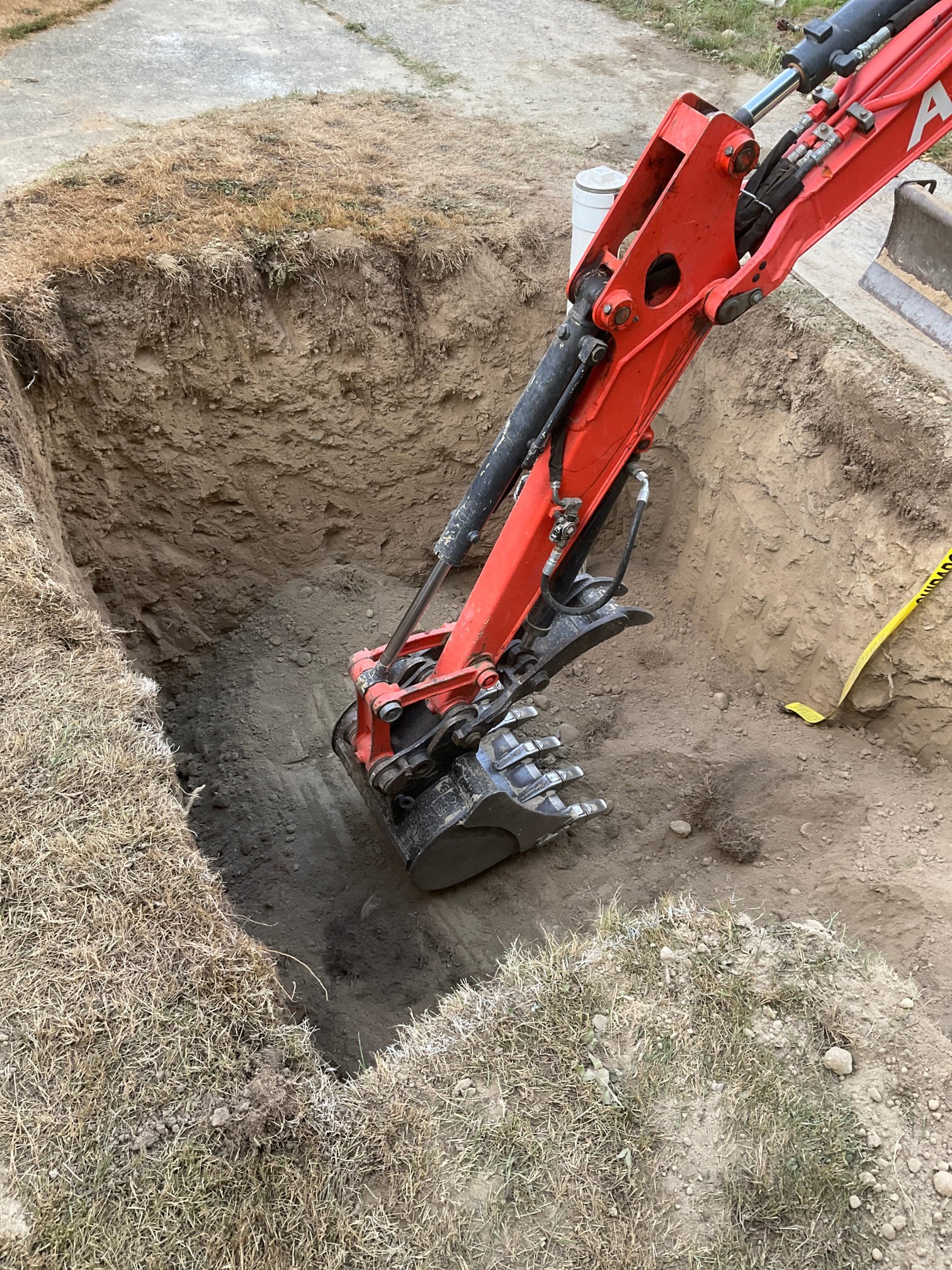
The good news is that sewer repair technology has advanced dramatically. Traditional excavation, where your yard is dug up to access the pipe, is no longer the only option.
Trenchless sewer repair methods, including pipe lining (CIPP) and pipe bursting, can repair or replace your sewer line with minimal disruption to your yard, driveway, and landscaping. These methods are faster, often less expensive, and cause far less property damage than traditional excavation.
At Bee’s Plumbing & Heating, we offer both traditional and trenchless repair options and will recommend the approach that best fits your specific situation. Every sewer repair begins with a thorough camera inspection so we can provide an accurate diagnosis and honest recommendation.
Preventive Measures
While you can’t prevent all sewer line problems, you can reduce your risk significantly. Schedule a sewer camera inspection every two to three years, especially if your home is more than 30 years old. Be mindful of what goes down your drains, including avoiding grease, wipes, and other non-flushable items. Consider preventive root treatment if you have trees near your sewer line. Address slow drains promptly rather than waiting for complete blockages. Know the age and material of your sewer line so you can plan for eventual replacement.
When to Call Bee’s Plumbing & Heating
Don’t wait for a sewage backup to investigate your sewer line. If you’ve noticed any of the warning signs in this article, contact Bee’s Plumbing & Heating to schedule a sewer camera inspection. We’ll give you an honest assessment of your sewer line’s condition and a clear explanation of your options if repairs are needed. Early detection and proactive repair always cost less than emergency service.
Need Professional Plumbing or Heating Help?
Our expert technicians are ready to assist you with any plumbing, heating, or drain needs.