Why Seattle Homes Need a Good Sump Pump
If you’ve lived through a Seattle rainy season, you already know — water finds its way in. Basements and crawl spaces in neighborhoods like West Seattle, Ballard, Queen Anne, Beacon Hill, and Rainier Valley sit on a mix of soil types, and a lot of the drainage infrastructure in these areas has been around for decades. That combination means a reliable sump pump isn’t optional. It’s the thing standing between you and a flooded basement.
The rain here doesn’t just come and go. It lingers for months, and groundwater levels near the Ship Canal and Duwamish River stay elevated well into spring. A submersible pump installed in a sealed basin catches that water early, before it starts pooling on your basement floor or turning your crawl space into a breeding ground for mold. Picking the right one comes down to pump capacity (especially for those heavy downpours), where the discharge water actually goes, and whether you’ve got a plan for power outages — because those tend to hit right when you need the pump most.
How to Tell Your Sump Pump Is Failing
A few things to watch for:
- The pump kicks on constantly, even during light rain, or it runs without ever seeming to stop
- You hear grinding or rattling, or the motor housing is hot to the touch
- There’s a musty smell near the basin, or your basement walls feel damp
- You spot rust, loose fittings, or the check valve doesn’t seem to be holding
- Your water alarm or smart sensor keeps going off
A pump that never shuts off is usually telling you something specific — it’s either too small for the job, the check valve is shot, or the discharge line is partially blocked. All of those need a pro to sort out.
When It Makes More Sense to Replace Than Repair
Even a well-installed sump pump won’t last forever. If you’re calling for repairs more than once a year, finishing your basement, or just tired of crossing your fingers during every storm, it’s probably time for a new unit. A lot of homeowners also take the opportunity to switch from an older pedestal-style pump to a submersible model — they’re quieter, take up less space, and tend to handle heavy water loads more consistently.
Picking the Right Setup for Your Property
Battery Backup, Alarms, and Monitoring
Power outages and big storms go hand in hand here. If your neighborhood loses power regularly, a battery backup pump is worth every penny. Pair it with a high-water alarm or a Wi-Fi-connected sensor, and you’ll get a heads-up on your phone before water becomes a problem.
Discharge Routing and Check Valves
Where the water goes after the pump pushes it out matters more than most people think. If the discharge line dumps water too close to the foundation, it cycles right back into the basin — and the pump just runs in circles. On sloped lots in Queen Anne or West Seattle, getting the outlet far enough downhill to prevent water return takes some planning.
Crawl Spaces and Tight Installations
A lot of Seattle homes don’t have full basements — they’ve got crawl spaces, and getting a pump installed properly in a tight, low-clearance area takes some experience. The basin needs to be sealed, sized right, and ventilated so you’re not just trading water problems for moisture and odor problems.
How Seattle’s Geography and Rain Complicate Things
Older neighborhoods — Ballard, Wallingford, Capitol Hill — have drainage systems that were put in decades ago and don’t always perform the way they used to. In flatter parts of South Seattle, the water table rises noticeably after a few weeks of steady rain. West Seattle’s clay-heavy soil holds water against foundations instead of draining it away. And on steeper Queen Anne hillsides, discharge water can travel back toward the house if the outlet isn’t placed far enough from the foundation.
What a Solid Installation Actually Looks Like
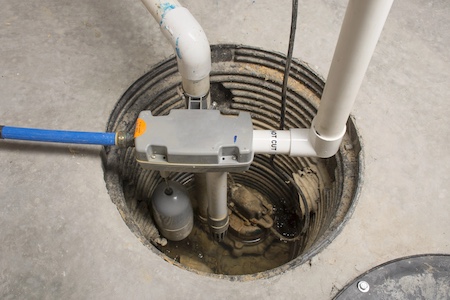
It starts with the right pump — submersible, properly sized — set in a sealed basin at the lowest point of your foundation. The discharge piping needs to be durable, sloped correctly, and well-supported so it doesn’t sag or shift over time. The check valve should be rated to minimize water hammer (that loud thud you sometimes hear) and prevent short cycling. And the whole system should run on a dedicated electrical circuit with proper protection, so a tripped breaker doesn’t leave you unprotected during a storm.
The Problems We Run Into Most Often
Across Seattle, these are the patterns we see again and again:
- The pump runs, but water in the basin doesn’t drop — usually a clogged intake or a worn-out impeller
- Water drains out of the basin, then flows right back in through the discharge line because the check valve is weak
- The motor overheats and shuts down during a long storm, right when it’s needed most
- A small leak in a finished basement triggers an alarm, and by the time someone notices, carpet and drywall are already damaged
In a lot of these cases, replacing the system ends up costing less than paying for one more round of repairs on aging equipment.
Keeping Your Pump in Shape
A seasonal check-up — ideally before fall rains start — goes a long way. A technician can run the pump, inspect the discharge line, check for wear on the float switch and check valve, and make sure your backup battery still holds a charge. It’s the kind of maintenance that feels unnecessary right up until the year you skip it.
A Couple of Real Jobs Around Town
West Seattle Bungalow: The homeowner had an old pedestal pump that ran loud and struggled to keep up during heavier storms. We swapped it out for a submersible unit with a sealed lid and extended the discharge line further downslope. Runtime dropped, the noise disappeared, and their newly finished floors stayed dry.
Green Lake Craftsman: This one had no sump system at all — just a damp crawl space and insulation that was starting to smell. We installed a properly sized basin, a submersible pump, and a battery backup. Added a high-water alarm too, which paid for itself during a January windstorm that knocked out power for eight hours.
What to Do Next
If your pump is making noise, running more than it should, or has let you down before, it’s worth getting a professional set of eyes on it. Reach out to Bees Plumbing and Heating — we’ll take a look and walk you through your options.
Call 206-745-7570 or request service online to talk about sump pump installation and replacement.
Need Professional Plumbing or Heating Help?
Our expert technicians are ready to assist you with any plumbing, heating, or drain needs.